What to Eat in Crete? A Guide to Cretan Food and Cuisine
Crete is a culinary paradise where every meal tells a story. However, many travelers get stuck in hotel buffets, missing the vibrant soul of the island. Don't let your taste buds miss out—it's time to discover the authentic flavors of Cretan tavernas!
What do you associate with food in Crete? Most will instinctively answer: Greek salad (Horiatiki). However, it's worth knowing that the original version differs from what we often see abroad—on the island, you won't find lettuce in it, but you will get a massive slice of real feta and aromatic olive oil.
The Secret to Longevity: Cretan Cuisine
Cretan cuisine is more than just a meal—it's the gold standard of the Mediterranean diet, to which locals owe their health and vitality. It is built on four pillars:
- Liquid Gold: The world's finest olive oil (95% of production is Extra Virgin!).
- Wild Greens: Fresh vegetables and herbs gathered directly from mountain slopes.
- Local Grains: Traditional barley rusks (paximadi).
- Moderation: Natural wine and fresh fruit as a completion of every day.
The star without which cuisine in Crete does not exist is olive oil. Its tradition dates back to Minoan times, and the ideal climate ensures that this "liquid gold" is unparalleled in aroma and health benefits. Olive groves stretching to the horizon are the island's greatest treasure and pride.
TOP 15: Flavors You Cannot Miss
Moussaka
Legendary eggplant and meat casserole topped with bechamel. The queen of Greek tavernas.
Dakos
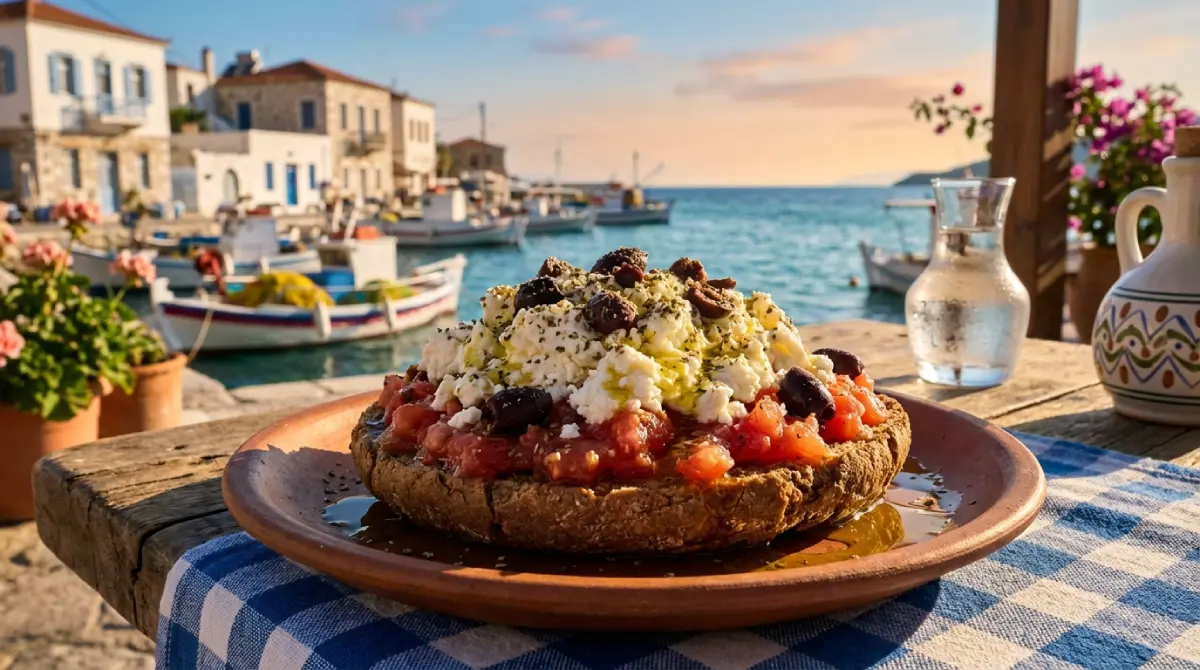
Cretan "health plate"—barley rusk with juicy tomatoes and fresh myzithra.
Chochlioi
Famous "boubouristi" snails fried with wine vinegar and fresh rosemary. A delicacy for the brave!
...and the remaining 12 dishes described in detail below!
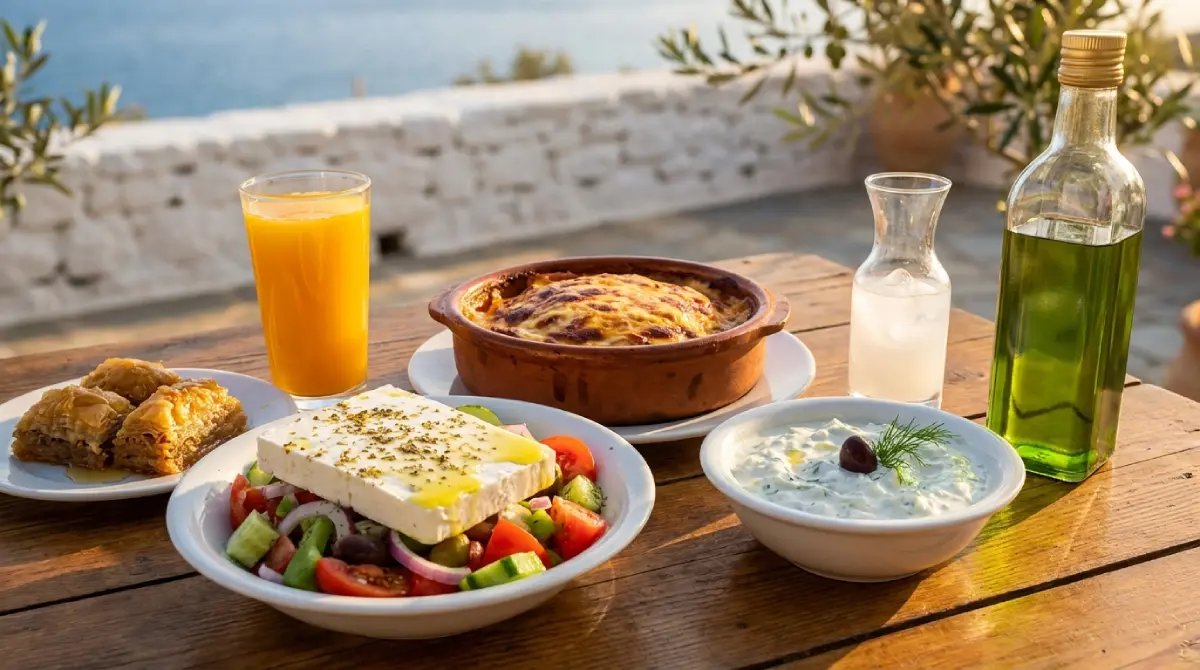
While olive oil is the undisputed star, cuisine in Crete offers a much richer array of flavors. Its greatest secret is brilliant simplicity—highest quality ingredients combined to bring out their best. Before you set out on your culinary conquest, an important decision awaits: All Inclusive or a local taverna?
My Advice: Even if you have full board at your hotel, reserve at least a few evenings for a local taverna. Real food in Crete, the smell of grilled lamb, and the taste of homemade feta are best where the locals eat.
Dakos – A Regional Dish for a Great Start to the Day
If you're wondering what to eat in Crete first, choose Dakos. It is the essence of the island on a single plate. This simple and incredibly filling regional dish consists of:
- Paximadi: A hard, barley rusk that serves as the base.
- Tomatoes: Freshly grated, juicy, and sun-ripened.
- Cheese: Traditional feta or creamy, slightly tart Myzithra.
- Herbs and Oil: A solid dose of oregano and, of course, first-press "liquid gold."
It's worth checking if your hotel offers Dakos on the breakfast menu—it's the perfect way to energize your morning. Remember that the further you go from main resorts, the more mysterious the names become (stakoboutyro, graviera, kleftiko), but don't be intimidated! Cretans are keen observers and will happily explain each dish, inviting you to join the feast with a smile.
Snacks for "Small Hunger" – Cretan Salad and Fruits
When light hunger strikes, the best choice is the iconic Greek salad (Horiatiki). As mentioned, food in Crete in its authentic form differs from international versions—you won't see lettuce here. The true version includes:
- Ripe tomatoes, cucumber, bell pepper, and red onion.
- A solid slice of feta cheese and a few black olives with pits.
- Plenty of oregano, with olive oil and wine vinegar served separately for your own seasoning.
It's also worth ordering the Cretan salad, which is enriched with pieces of barley rusk (paximadi) that soak up the tomato juice and oil. On hot days, juicy melon or watermelon is also a perfect snack.
Regional Lunch Dishes – What is Worth Eating in Crete?
Wondering what is worth eating in Crete for a filling lunch? The island is famous for several signature regional dishes that will satisfy any meat or vegetable lover:
For fans of lighter flavors, I recommend dolmades (rice with herbs wrapped in grape leaves) or kolokithokeftedes—crispy zucchini fritters with feta, best enjoyed with homemade tzatziki (thick yogurt, cucumber, and garlic). If you prefer soups, be sure to try those based on tomatoes or zucchini.
Fresh Seafood in Harbor Tavernas
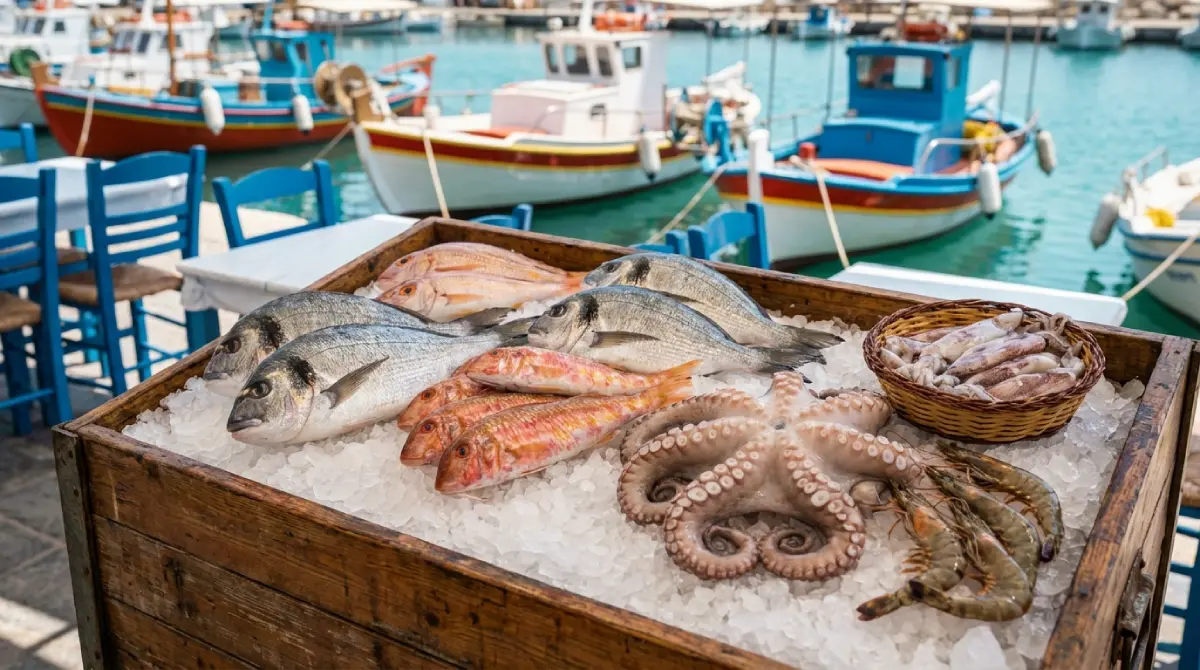
For seafood lovers, Crete is a true paradise. Look for the best dishes in tavernas near the harbor (e.g., at the Venetian Harbor in Chania, the old port of Rethymno, or Hersonissos), where fishermen deliver fresh catches every morning.
Owners often display fish and seafood on ice in front of the entrance, allowing you to choose a specific piece of sea bream, red mullet, or lobster. A freshly squeezed orange juice or Ouzo—an anise-flavored spirit served with ice and water—perfectly complements seafood.
Desserts in Crete – The Sweet Side of the Island
Cretans love sweets, and Greek cuisine treats desserts as the crowning glory of every feast. If you're wondering what to eat in Crete for a treat, prepare for a large dose of honey and nuts. Two flagship delicacies reign supreme:
Crispy layers of filo pastry layered with chopped almonds, walnuts, and spices (cinnamon, cloves), generously soaked in aromatic honey syrup.
An extraordinary dessert made from shredded pastry (resembling fine noodles), filled with nuts and honey. It has a unique, crunchy structure.
Greek Coffee and the Famous Frappe
No sweet dessert is complete without coffee. Coffee in Crete is a ritual that takes two forms:
- Greek Coffee (Ellinikos kafes): Very strong, brewed in a small pot (briki), served in small cups with a thick layer of grounds at the bottom.
- Frappe: The cult iced coffee, perfect for hot days. It is instant coffee whipped with water into a stiff foam, served with ice. When ordering, you'll be asked about sugar and milk (sketos – bitter, metrios – medium, glykos – sweet).
Cretan Cheeses – Which Ones are Worth Trying?
Before you end your culinary adventure, be sure to try local products that are the pride of the island. Cretan cheeses made from sheep's and goat's milk have a unique character:
| Cheese Name | Characteristics |
|---|---|
| Graviera | A hard, slightly sweet cheese, often served with thyme honey. |
| Myzithra | A soft, creamy cheese with a delicate taste, the base for Dakos and Kalitsounia. |
| Stakoboutyro | A type of highly aromatic butter (sheep's lard) used for Gamopilafo rice. |
Remember that food in Crete is not just about taste, but above all about the joy of being together. Whether you choose All Inclusive or a local taverna, the flavors of the island will stay with you long after your vacation ends.
TOP 5 Dishes You Must Try (Food in Crete):
- Dakos – traditional barley rusk with tomatoes and myzithra cheese.
- Moussaka – eggplant and meat casserole under bechamel sauce.
- Chochlioi Boubouristi – famous Cretan snails fried in vinegar and rosemary.
- Kalitsounia – small pies with cheese or greens.
- Gamopilafo – Cretan wedding rice cooked in meat broth.
Summary: What to Eat in Crete?
| Category | Key Information (Dishes and Products) |
|---|---|
| Diet Foundation | Cuisine based on olive oil, fresh vegetables, and wine. 95% of production is Extra Virgin. |
| Breakfast | Dakos: barley rusk, grated tomatoes, feta or myzithra, oregano, and lots of oil. |
| Regional Dishes |
|
| Seafood | Fresh seafood (fish, lobster, mussels) tastes best in harbor tavernas. Pick your fish from ice! |
| Local Cheeses | Famous Feta, creamy Myzithra, hard Graviera, and aromatic Stakoboutyro. |
| Drinks & Coffee | Fresh orange juice, Ouzo, traditional Greek coffee, and iced Frappe. |
| Desserts | Honey-soaked Baklavas and shredded Kadaifi with nuts and cinnamon. |
| Tips | Look for tavernas where locals eat. True Cretan cuisine is outside the hotel All Inclusive! |
Where to Eat in Crete? Best Places for an Authentic Dinner
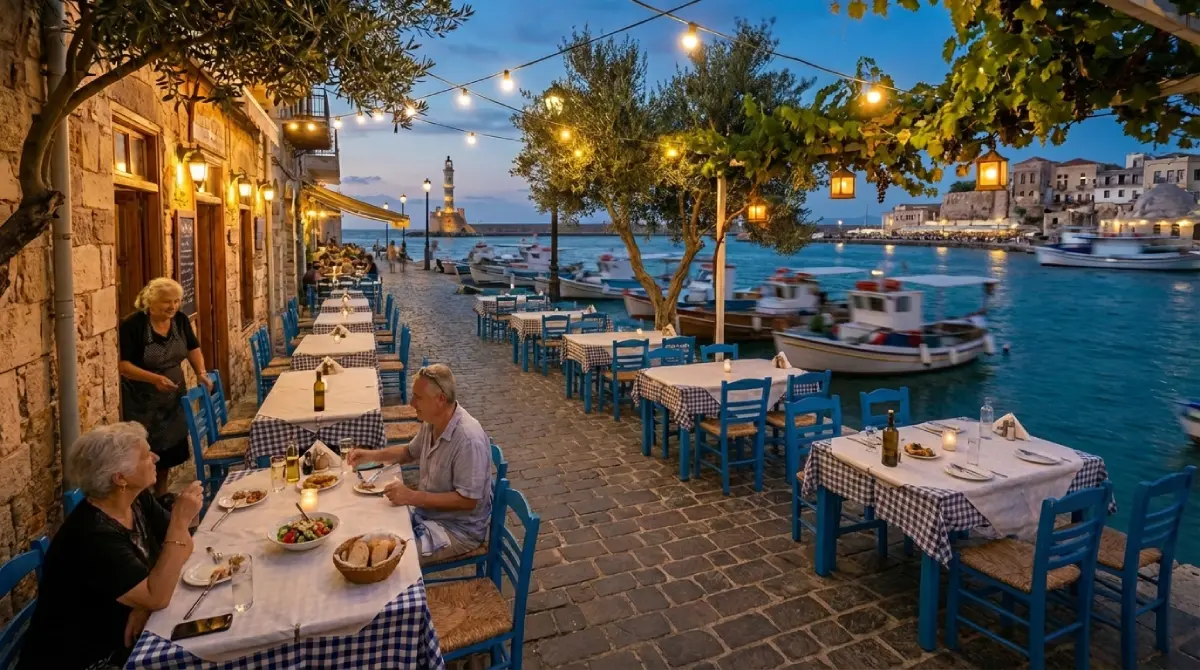
A true adventure with food in Crete begins where the tourist trails end. While hotels offer rich buffets, it's in the local tavernas, hidden in the narrow alleys of Chania, Rethymno, or tiny mountain villages like Spili, that you'll feel true Greek hospitality and taste dishes prepared according to family recipes.
Harbor Tavernas
Ideal for seafood and fresh fish. Look for places where fish are displayed on ice—sea bream or red mullet straight from the grill tastes best with a view of the sunset.
Wineries and Markets
Visit local wineries to try Vidiano or Kotsifali varieties. At local markets (laiki agora), be sure to buy thyme honey and Graviera cheese.
Theme Evenings
Participate in cooking demonstrations or Greek nights. It's a chance to see how perfect moussaka is made and feel the atmosphere of a real Greek dinner.
An evening stroll is the perfect time to visit a local zacharyplastio (confectionery). The smell of baked filo pastry, honey, and nuts will lead you to the best portions of baklava and kadaifi in town. Remember: in Crete, cuisine is not just calories—it's the history of the island served on a plate.
FAQ – Food and Cuisine in Crete
The absolute number one choice is Dakos (rusk with tomatoes and cheese) and Moussaka. If you're looking for something unique to the island, try Chochlioi Boubouristi, the famous Cretan snails fried with rosemary.
Prices depend on the location. In a typical taverna, you'll pay between 8 and 15 EUR for a main course. Dinner for two with wine usually costs 30-45 EUR. Remember that in many places, you'll receive a free dessert or a carafe of Raki "on the house" at the end.
Greek Salad (Horiatiki) is a classic combination of vegetables and feta. Cretan Salad often additionally contains crumbled barley rusks (paximadi), local soft Myzithra cheese instead of feta, and capers.
Yes, Cretan cuisine is very healthy and based on fresh ingredients. Children love Souvlaki (skewers), zucchini fritters, and fresh fruit. Most tavernas are very family-friendly and will easily prepare a smaller portion.
Buy the best oil directly from agricultural cooperatives or small presses (fabbrica). Look for "Extra Virgin" and "Cold Pressed" labels. Also check local markets (laiki agora), where farmers sell their own products at attractive prices.
Raki (Tsikoudia) is a strong spirit made from grape pomace, a symbol of Cretan hospitality. It's sipped in small glasses, usually after a meal. It's not a drink for "shots"—it tastes best sipped slowly with local cheeses or fruits.
You might also be interested in...
Handpicked specifically for you to make your journey to Crete complete.
Knossos and Heraklion
Travel back to the cradle of Minoan civilization. Check out how to most effectively explore the legendary palace labyrinth of the Minotaur, what to see in the Archaeological Museum, and how to find the most interesting corners of Crete's capital.
Read article →Tours and Sightseeing
Plan your perfect adventure on the island. Discover whether it is better to choose professional organized tours or explore hidden gems on your own with a rental car. We analyze the best routes to Knossos, Balos, and Samaria Gorge to help you maximize your holiday time.
Read article →