Safety and Health in Crete – Your Ultimate Guide for 2026
When planning your dream holiday, health and safety are the foundation of a relaxing trip. Are there sharks in Crete? How quickly can you find medical help in an emergency? Below, we've gathered all the key information so you can soak up the sun without unnecessary worries.
Crete consistently ranks as one of the safest destinations in the Mediterranean. The locals are incredibly hospitable, and petty crime is rare. However, the island's specific nature – from the scorching sun and winding mountain roads to the rocky seabed – requires tourists to have a bit of knowledge and caution.
In this guide, we answer the most frequently asked questions about healthcare in Crete, road safety, and potential natural hazards in 2026. Find out how to pack your travel first-aid kit and what to keep in mind while swimming in the crystal-clear waters of the Aegean and Libyan Seas.
Is Crete safe?
Yes, Crete is considered one of the safest islands in Europe, both for families with children and solo travelers. Tourists visiting Crete in 2026 can feel completely at ease – the crime rate is very low, and the local community is friendly and welcoming. As with any travel destination, it's advisable to take basic precautions, such as keeping an eye on your documents and not leaving valuables unattended on the beach.
Safety in Crete – What you should know
The situation in Crete remains stable and safe. There are no terrorism threats, and the presence of law enforcement and emergency services is well-organized. Local authorities prioritize public order and tourist safety. The Greek Tourist Police is always ready to assist, and they typically speak English fluently.
Sharks in Crete – Are they in the surrounding waters?
This is one of the most common questions from people planning a holiday in Greece. Wondering if there are sharks in Crete often causes anxiety, but rest assured – the Mediterranean Sea in this region is exceptionally safe for tourists. Aggressive or man-eating species do not inhabit the waters surrounding the island, and statistically, shark attacks in Greece have been virtually unheard of for decades.
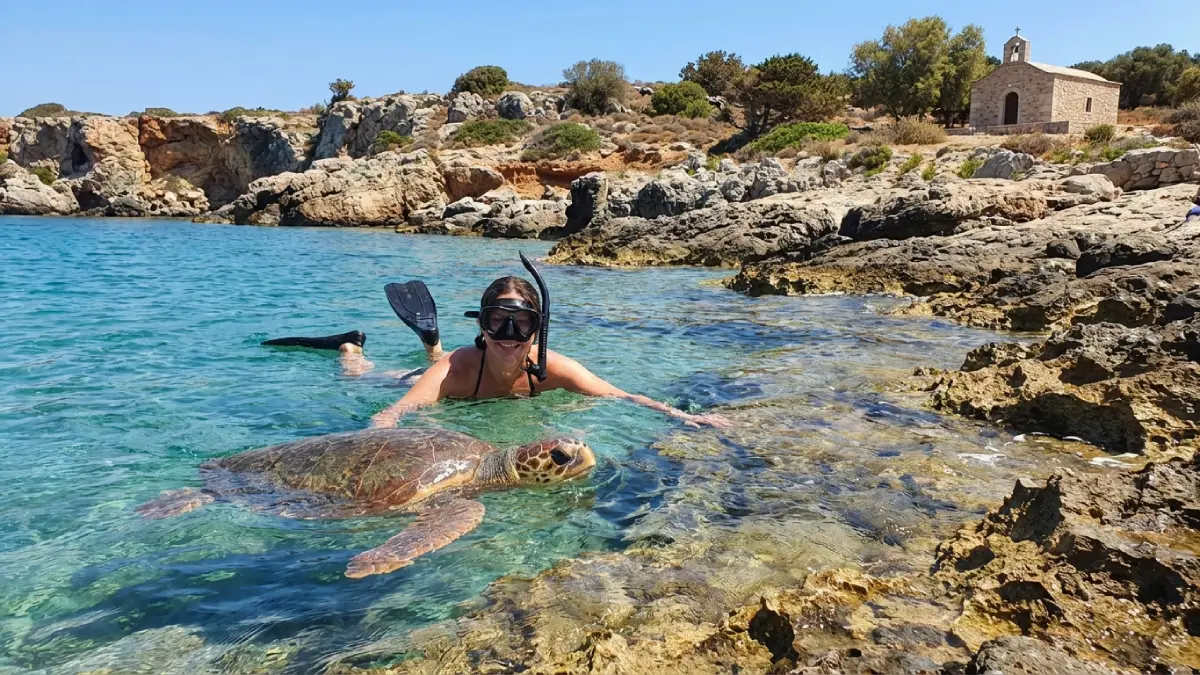
Encounters with these creatures are extremely rare and mostly involve small, timid species that live at great depths, far away from bustling resorts. Instead of predators, while snorkeling in Crete near the shores of Elafonisi or Balos, you are much more likely to spot stingrays, octopuses, and the protected Caretta caretta sea turtles. Local swimming areas are constantly monitored, and the crystal-clear water offers excellent visibility, further enhancing safety while swimming. You can enjoy the beautiful beaches—a true paradise for swimming and water sports lovers—without any fear.
Scorpions, snakes, and spiders – Are there venomous animals in Crete?
This topic often sends shivers down people's spines, but the reality on the island is much calmer than in adventure movies. During my countless hikes across Cretan wilderness, I've learned that Crete's wildlife is timid and rarely crosses paths with humans. However, it's good to know who you might meet on the trail.
Snakes in Crete are a rare sight. There are four snake species on the island, and only one of them – the Cat Snake (Telescopus fallax) – is venomous. But I have good news: its fangs are located deep in the back of its jaw, meaning it poses no real threat to an adult human. The other snakes are completely harmless and usually slither away before you even have the chance to grab your camera.
Scorpions in Crete: They are small, usually dark brown or black. While finding one under a rock might give you a scare, their venom is comparable to a wasp or hornet sting. A sting is reportedly painful, but thankfully I've never had to experience it myself. My advice: Always shake out your shoes before putting them on if you leave them outside on the patio overnight, and don't stick your hands into crevices of stone walls without checking.
As for spiders, the Mediterranean black widow does exist on the island, but the chances of encountering one in a tourist resort are close to zero. The biggest "danger" from local fauna remains... sea urchins. They are the most common cause of ruined holidays, so don't forget your water shoes, especially on the wild and rocky beaches of the southern coast.
Healthcare in Crete
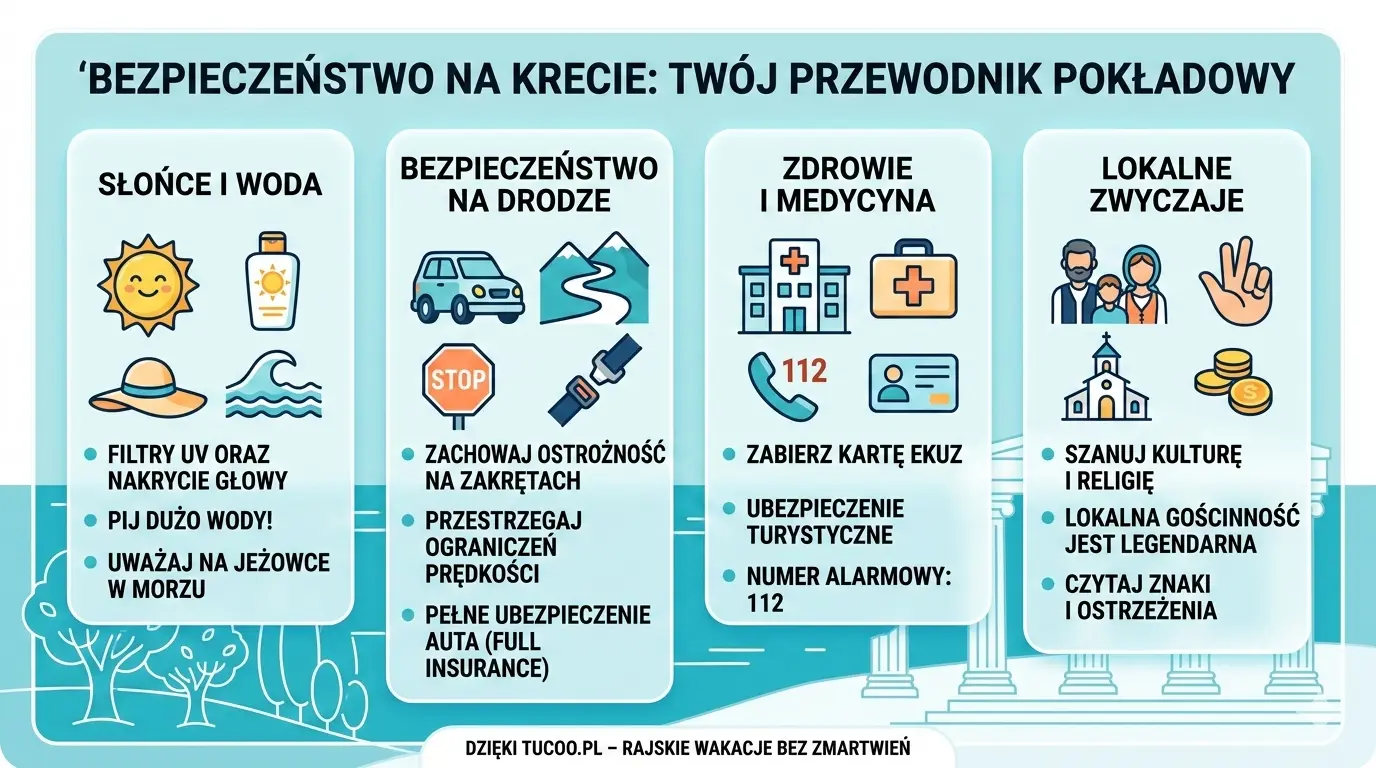
Healthcare in Crete operates efficiently and at a high standard. In major cities like Heraklion, Chania, or Rethymno, you will find modern hospitals and private clinics. Medical staff frequently speak English, and the standards of treatment are comparable to Western Europe. In emergencies, it's highly recommended to carry your EHIC (European Health Insurance Card) or have private travel insurance.
Hospitals in Crete – Key facilities
If an unexpected health issue arises during your holiday, professional medical care in Crete is available in every major region of the island. Modern hospitals and clinics in Chania, Heraklion, and Rethymno provide a high standard of treatment, and the English-speaking staff ensures a sense of security in any emergency.
Below you will find a list of the main public hospitals that treat tourists and have Emergency Departments:
General University Hospital (PAGNI)
In smaller towns, there are Health Centres that provide basic medical assistance for non-emergencies.
Crime in Crete – Are tourists at risk?
The crime rate in Crete is very low, especially compared to large European cities. Pickpocketing occurs occasionally in crowded tourist spots, so it's wise to remain vigilant in city centers and on beaches. Street violence is practically non-existent, and tourists are warmly welcomed by the island's residents.
Many travelers wonder is Crete safe for families with children or solo travelers – statistics have confirmed for years that it is one of the most peaceful regions in all of Europe. When planning a safe holiday in Greece, however, it's always good practice not to leave valuables in plain sight in a parked car. The sense of freedom this island offers means that tourist safety is at a very high level, allowing you to fully enjoy the Greek sun without unnecessary stress.
Safe areas in Crete – Where to stay?
All main resorts in Crete are considered safe. Highly recommended regions and cities include:
- Elounda – a luxurious and peaceful town on the east coast,
- Chania (Nea Chora district and Old Town) – very tourist-friendly and safe,
- Rethymno (Perivolia district) – close to the beach, perfect for families,
- Agios Nikolaos – a quiet town with a typical Greek vibe.
Refugees in Crete – What is the situation?
There have been no significant issues regarding refugees in Crete. The main migration routes go through other parts of Greece (e.g., islands like Lesbos or Samos). The current situation is entirely stable and does not affect the safety of tourists visiting Crete.
Many travelers following the news wonder if the situation on the Greek islands also applies to the largest of them. Due to its geographical location, Crete remains outside the main area of the migration crisis. You can plan your safe holidays without worrying about your comfort, as daily life in the resorts and cities goes on at a completely normal, peaceful pace.
Emergency services – How to call for help?
In case of an emergency, call the 112 emergency number, which works across the entire European Union. Crete has a network of ambulances, and medical rescue is well-organized. During the summer season, lifeguards are often present at resorts and popular beaches, and hotel staff are familiar with first-aid procedures.
Pharmacies in Crete – Opening hours and rules
Pharmacies (Farmakeio) in Crete are widely available, especially in cities and resorts. Typical opening hours are 8:00 AM–2:30 PM and 5:30 PM–8:30 PM. In every town, there are duty pharmacies (operating on a rotating schedule). The list of on-duty pharmacies is usually posted on pharmacy doors or available online. Pharmacies are staffed by qualified pharmacists who often speak English.
Natural phenomena – Earthquakes, wildfires, and strong winds
Greece, including Crete, lies in a region with specific geographical conditions. Although these phenomena rarely affect holidays, as an informed traveler, you should know what the actual situation looks like in 2026.
Earthquakes in Crete – Is there anything to fear?
Crete lies in a seismically active zone, right where tectonic plates meet. In practice, this means earthquakes happen regularly, but 99% of them are micro-tremors that tourists don't even notice. Buildings on the island (especially hotels and new apartments) must meet strict anti-seismic standards, making them incredibly safe. Major quakes are rare, and their epicenters are usually deep under the seabed.
Tip: If you feel tremors inside a building, stay calm. According to safety protocols, it's best to take cover under sturdy furniture or stand in a structural doorway, and calmly exit the building once the shaking stops.
Wildfires in Crete – A real threat in the season
During the summer months (July-August), the biggest threat in Crete is vegetation fires. High temperatures exceeding 35°C (95°F), lack of rain, and strong winds mean that dry grass and bushes can easily catch fire. Local authorities publish daily fire risk maps. On days with the highest risk (category 4 or 5), bans on entering forests and gorges — including the famous Samaria Gorge — are often enforced.
Remember: If you spot smoke, immediately call 199 (Fire Brigade) or the general emergency number 112. Never throw cigarette butts out the window and do not use an open flame near dry vegetation.
Strong winds and dangerous currents (Meltemi)
In summer, a characteristic dry wind called Meltemi blows across Crete. While it brings relief from the heat, it can cause very high waves on the island's northern coast. On such days, red flags are hoisted on the beaches. Rip currents can be treacherous—even if you are a great swimmer, do not ignore swimming bans. If the wind is very strong, also exercise caution while driving on open areas and bridges.
FAQ – Health and Safety in Crete
Yes, Crete is considered a very safe island. You just need to follow standard precautions: be careful on the road, protect yourself from the sun, and keep an eye on your belongings in crowded tourist spots.
The island has both public and private medical facilities. Major cities have large hospitals, while resorts have health clinics and pharmacies. Before traveling, it's worth getting an EHIC card and purchasing additional travel insurance.
There are no mandatory vaccinations. However, routine vaccines (like tetanus or Hepatitis A), which are standard for international travel, are recommended.
The biggest challenge for your body is the sun – heatstroke, dehydration, and sunburns are common. Remember to use high SPF sunscreens, wear a hat, and drink plenty of water. Also, watch out for sea urchins when swimming at rocky beaches.
Tap water is safe to drink (it often comes from mountain springs), but due to its distinct taste and different mineral composition, most tourists prefer bottled water, which is cheap and widely available.
Roads in Crete can be narrow, winding, and slippery (even when dry). Be especially careful in the mountains and don't be fooled by local drivers overtaking aggressively. When renting a car, always choose the full insurance option.
Summary: Safe holidays in Crete in 2026
Crete in 2026 remains one of the safest destinations in the Mediterranean. High standards of medical care, the hospitality of the locals, and professional tourist infrastructure make it an ideal place for both family vacations and solo adventures.
Your safety checklist
To feel completely comfortable, sort out these three things before your flight:
- Bring your EHIC card (for EU residents).
- Buy private travel insurance (it usually costs just a few bucks a day).
- Save the emergency number 112 in your phone.
Remember that your safety depends primarily on basic caution. Although petty crime is almost non-existent here, the biggest challenges for tourists tend to be the intense Greek sun and the specific driving style on mountain serpentines. If you're planning a trip and wondering if Crete is safe – the answer is: absolutely yes.
My advice: Don't be afraid to ask locals for help. Cretans are famous for "Philoxenia" (love of strangers), and if you run into any trouble, they'll gladly point you to the nearest pharmacy or doctor.
You might also be interested in...
Handpicked specifically for you to make your journey to Crete complete.
Balos Lagoon - Paradise on Earth
A practical guide to the most iconic beach in Crete. We advise whether it is better to choose a relaxing boat cruise from Kissamos or a thrilling and scenic off-road trip across the Gramvousa peninsula.
Read article →Knossos and Heraklion
Travel back to the cradle of Minoan civilization. Check out how to most effectively explore the legendary palace labyrinth of the Minotaur, what to see in the Archaeological Museum, and how to find the most interesting corners of Crete's capital.
Read article →